Article summary
Not sure whether to repair or replace your fence? We break down the costs, signs, and factors to help Auckland homeowners decide.
- Category:
- repair
- Read time:
- 7 min
- Published:
- 22 April 2026
- Updated:
- 2 November 2026
- Written by:
- Md Mahfuzur Rahman (Milton), Project Manager, My Homes Fencing Expert
Quick answer: repair when the damage is limited to a few posts or palings and the rest of the frame is sound. Replace when posts are soft at ground level along the run, more than about a third of the fence is affected, or you have already repaired it twice in a short time. As a guide, replacing three posts budgets at about $450–$1,200, while a new 20m timber fence budgets at about $1,800–$3,200, so the real question is how many years each option buys.
It's the question we get asked on almost every storm-damage and old-fence call-out across Auckland: patch it, or pull it out and start again? The answer depends less on how bad the fence looks and more on what's happening below the ground, so here's how we make that call on site, and how you can run the same numbers yourself.
When Will a Repair Do the Job?
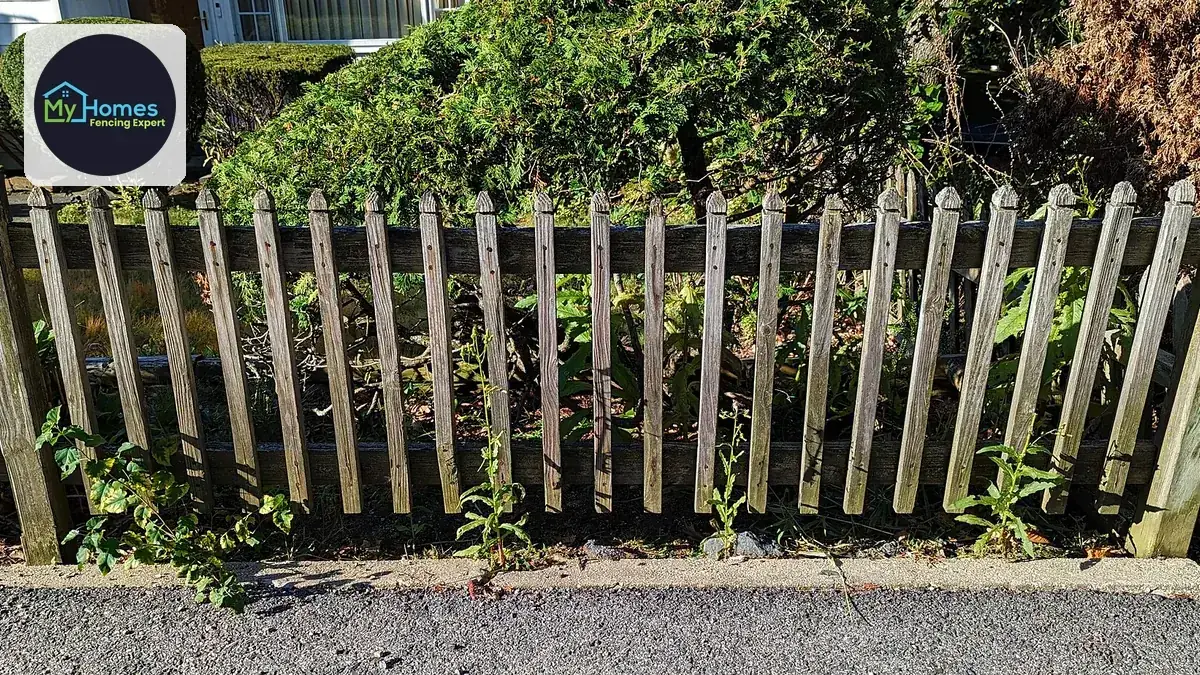
A fence is usually a good repair candidate when the damage is localised: a car reversed into one bay, a single post has rotted while its neighbours are solid, or a storm knocked out a short run of palings. If the footings elsewhere are sound and the timber isn't soft to the touch, swapping the affected posts, rails or palings restores the fence at a fraction of a rebuild's cost.
We also lean toward repair when a fence is relatively young, under about 8 to 10 years, and the failure is a one-off rather than a pattern. One cause with one fix is the sign you want. Concreting in one or two new posts and replacing damaged boards can be done in a single visit on most Auckland sections.
A repair is also the right call when the money is better spent elsewhere for now. If you plan to change the fence in a couple of years anyway, a tidy and safe repair is a perfectly honest decision, provided you know it's a stopgap and not a cure.
When Is Replacement the Smarter Spend?
Replacement makes more sense once the problems are spread along the fence line: several leaning sections, timber that's splintering throughout, or posts that wobble when pushed. Older fences built before H4 in-ground treatment became normal tend to fail in clusters as they reach the end of their life, so repairing one bay often just buys a few months before the next one goes.
It's also worth replacing if you're changing height, style or material, for example moving from an old paling fence to aluminium or a modular wall for lower maintenance. Any repair on a fence that's coming out anyway is wasted money.
The third case is safety. A fence leaning over a footpath or driveway, or a pool barrier that no longer holds its height or latches properly, shouldn't wait for a budget cycle. A pool fence in particular has to keep meeting the pool barrier rules, so talk to someone before altering it.
How Do You Compare Repair and Replacement on Cost?
Compare cost per year rather than the total. Work out what each option costs, estimate how many years it realistically buys, and divide. A repair at $450–$1,200 that buys three years may be poorer value than it first appears if a new fence would last for decades. A repair on a sound 8-year-old fence that buys another ten years is excellent value.
For a straight run, count the posts that have failed and multiply by $150–$400 per post, then add palings and rails. Compare that with the new-fence rate multiplied by the length, plus removal at $20–$50 per metre. If the repair total is closing in on half the price of a new fence, and the rest of the timber is old, replacement normally wins.
Don't forget the neighbour in that sum. Replacing an inadequate boundary fence usually qualifies for cost sharing under the Fencing Act, which can halve your share of a new adequate fence. That can change the comparison on an old shared fence quite sharply.
What Can You Check Yourself Before Calling Anyone?
Walk the line and push each post firmly at chest height. A sound post should barely move. Movement that starts at the ground, or a hollow, soft feel, usually means the post has gone below the surface even if it looks fine above. Then push a screwdriver into the timber right at ground level: if it sinks in easily, that post has rotted.
Count what you find. Write down how many posts move, how many bays lean, and how many palings are split or loose. Note whether the failures are bunched in one place or spread out, because bunched problems often have a local cause like a downpipe or a soggy patch of ground, which you should fix at the same time as the fence.
Finally, look at the top rail. If you sight along it from one end and it runs in a wave, the posts have been moving for some time. That's useful information to give a builder, and it usually points toward replacing the run rather than chasing each post.
Is There a Middle Option?
Yes, and it's often the best value. Replacing just the worst stretch while keeping the sound sections spreads the cost over time, and it's sensible where one end of the boundary gets wet ground or heavy wind and the other doesn't. You can also rebuild a fence on new posts while reusing rails and palings in good condition, though old timber limits how much of that is worthwhile.
A partial job does leave a visible join. New timber will look different from old for a few seasons, which staining the whole run can largely solve. Matching a discontinued profile or an old colour is harder, so check what's still available before you settle on this route.
Ask for both options to be priced whenever you're unsure. A straightforward side-by-side of repair, partial replacement and full replacement makes the decision much easier, and a builder who offers only the most expensive option hasn't really assessed your fence.
What Does a Proper Assessment Look Like?
A trustworthy assessment starts below ground, not at the visible paling. We check post condition at ground level where rot starts, footing depth and concrete condition, and whether the existing framing can safely carry new boards. From there we give you the options costed side by side, so you can compare them against how many more years each one buys.
We also look for the reason it failed. Soil piled against the fence, a blocked drain, a leaking downpipe or a tree root will damage a new fence or repair in the same way, so that needs to be part of the plan. Fixing the symptom without the cause is the most common way of paying twice.
We'll always tell you if a repair is a short-term patch rather than a lasting fix. For an honest repair-or-replace answer on your own fence, call us on 022 315 8987 and we'll have a look anywhere in Auckland.
Frequently Asked Questions
Push firmly at chest height. Movement from the ground, or a hollow, soft feel near ground level, usually means the post has rotted below the surface. A screwdriver that sinks easily into the timber at the soil line confirms it.
Yes, provided the remaining sections are structurally sound. We'll flag during the site visit if neighbouring bays look close to failing too, so you aren't caught out again in a year.
Not usually. If a fence is failing in several spots, each repair tends to be followed by another nearby. Once you've had two or three repairs in a short time, a rebuild is normally the better-value option.
As a guide, about $150–$400 per post including GST. The price varies with post type, how the old footing has to come out, and access to the fence line.
They may have to contribute to either if the fence is inadequate, under the Fencing Act 1978. Talk to them first and agree in writing, or serve a fencing notice before work starts, except in a genuine emergency where the fence must be made safe.
There's no legal figure, but about a third of the run is a practical guide. More important is whether the failures are spread along the line and whether the posts are going, because that shows the whole fence is ageing.
Official Sources
- Fencing Act 1978 — New Zealand Legislation
- Safety guidance for pool owners — MBIE Building Performance
General information, not legal advice. Rules vary by property and zone, so check your address with Auckland Council before you build.
Ready to start your fencing project?
Get a free, no-obligation quote anywhere in Auckland.
Get a Free QuoteRelated fencing services