Article summary
Security and boundary fencing options for commercial, industrial, and retail properties in Auckland.
- Category:
- local
- Read time:
- 8 min
- Published:
- 13 March 2025
- Written by:
- My Homes Fencing Expert
Quick answer: commercial fencing is driven by security, durability and access control more than looks — the right choice depends on what you're protecting. Steel palisade and welded mesh (security-rated) fencing suit yards and industrial sites, while powder-coated steel or aluminium works where a business also wants a tidy street image. Gates and access control are as important as the fence, and everything needs to stand up to heavy use and Auckland weather for years.
For a business, a fence is a security and asset-protection decision. Here's how to match the solution to the site.

Start From What You're Protecting
Commercial fencing goes wrong when it is specified by appearance — someone pictures a security fence and buys something that looks like one. The useful starting point is a short, unglamorous inventory: what is on this site, what would someone realistically want to take, how would they get it out, and what does it cost the business if they succeed.
That last question is the one that sets the budget. A yard holding copper, tools, batteries or catalytic converters faces organised, equipped, motivated theft. A yard holding bulky low-value stock faces opportunism. Those are different threats and they justify very different fences, and confusing them means either overspending or protecting nothing.
It also matters how a thief would remove what they take. Fencing that a person can climb but a laden person cannot, or that prevents a vehicle getting close to a loading point, addresses the actual removal problem rather than the abstract idea of entry.
Deter, Delay, Detect
Physical security professionals think in three layers, and it is a genuinely useful frame for a fence quote. Deterrence is making your site look like more effort than the alternative — height, visible robustness, clear sightlines, lighting, signage. Most opportunistic attempts stop here.
Delay is the fence's real job against a determined intruder. No fence is impenetrable; what a good one buys is time — time to be seen, time for an alarm response, time for the attempt to become unattractive. Anti-climb profiles, welded rather than bolted construction, and mesh apertures too small for a foothold or a bolt cutter all buy delay.
Detect is where the fence works with everything else: cameras with clear sightlines along the boundary, lighting that removes shadow, and a layout that makes an intruder visible while they are being delayed. A fence specified without thinking about the camera positions frequently creates the blind spots it was meant to remove.
Fence Types by Security Level
Chain link is a boundary marker rather than a security fence. It defines the site, it is cheap over long runs, and it is cut in seconds. It has a legitimate place on low-risk perimeters and with a topping it deters casual climbing, but do not confuse it with protection.
Welded mesh panel fencing is the current workhorse for genuine security. Small apertures deny a foothold and resist bolt cutters, the panels are rigid, and it stays visually transparent — which matters for surveillance and for a site that does not want to look like a compound. It is generally the default recommendation for commercial yards.
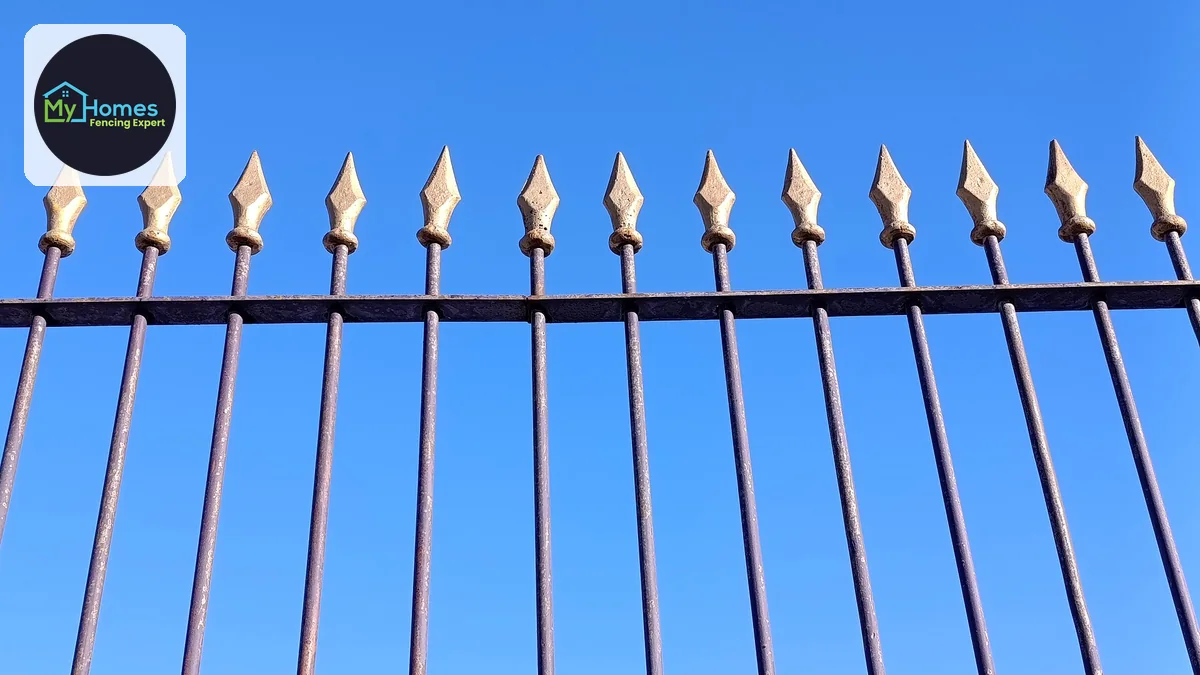
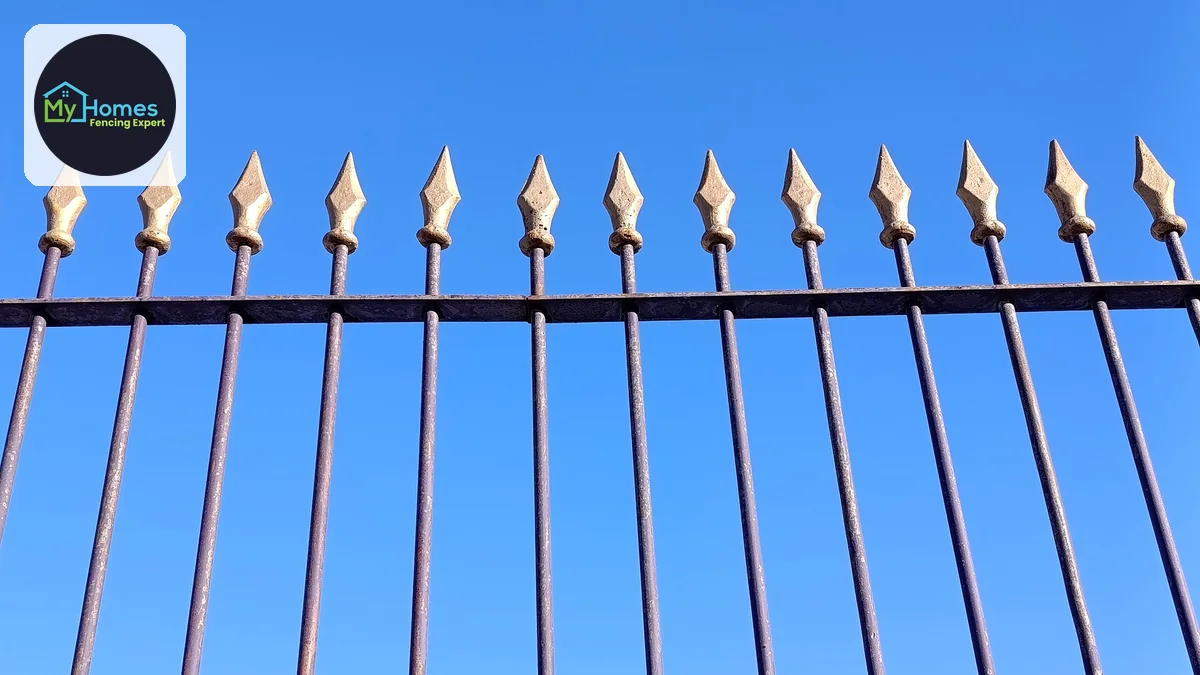
Steel palisade is the traditional high-security option: tall, difficult to climb, visually forbidding, and effective where deterrence value is worth an aggressive appearance. Tubular steel and powder-coated aluminium sit at the presentable end, suiting offices, retail and customer-facing frontages where the fence has to do a security job without announcing it.
Gates Are the Weak Point on Every Site
On a commercial site the gate is the most used component, the most vulnerable, and the one most likely to be under-specified relative to the fence around it. A perimeter is only as strong as its opening, and there is little point installing serious fencing and then hanging a gate that can be lifted off its hinges or levered at the latch.
Commercial gate hardware needs to be rated for a duty cycle nobody applies at home — a gate opened forty times a day is opened more in a month than a residential gate is in five years. Hinges, bearings, tracks and motors all need to be commercial-grade or they become a maintenance line item and then a security gap.
Design details that matter: hinges that cannot be lifted or cut from outside, a substantial drop bolt on double gates, ground clearance small enough that nobody rolls underneath, and — for sliding gates — a track kept clear of debris, or a cantilever system that removes the track problem entirely.
Access Control and the Audit Trail
Automation on a commercial gate is not mainly about convenience. It is about controlling and recording who enters, which becomes a genuine business capability rather than a fence feature. Keypads, card and fob readers, intercoms and remotes each suit different traffic, and the right answer usually mixes them.
The consideration most businesses miss is credential management. Shared keypad codes never get changed when staff leave, which quietly turns a controlled site into an uncontrolled one over a couple of years. Individual credentials that can be revoked cost more upfront and are the only version that stays true.
Plan the deliveries and contractors problem explicitly too — it is the daily reality that defeats most systems. A site where the gate gets propped open every morning because there is no workable way to admit a courier has no perimeter at all, regardless of what was installed.
Temporary Fencing, Hoarding and Site Safety
A different commercial need entirely is protecting the public from your work rather than protecting your assets from the public. Construction and renovation sites carry duties to keep people out of harm's way, and temporary fencing or solid hoarding is usually how that is discharged.
The requirements are practical: the barrier has to stay standing in wind, which means proper bracing and ballast rather than panels leaning on feet; it has to be secure out of hours; and where it borders a footpath it has to keep pedestrians safe and moving, which can mean solid hoarding rather than mesh.
Hoarding also has a commercial upside worth taking. A clean, branded hoarding around a fit-out or a build is one of the cheapest pieces of advertising a business will ever run, and it turns a period of disruption into visible progress rather than an eyesore.
Durability, Insurance and Total Cost
Commercial fencing takes wear residential fencing never sees — forklifts, delivery trucks, trailers reversing, and constant use. Specify for impact as well as intrusion: substantial posts, replaceable panels, and bollard protection at corners and gate posts where vehicles actually hit things.
Auckland's exposure compounds it. Hot-dip galvanising, quality powder-coat systems and correctly matched fixings are what keep a commercial fence serviceable near the coast, and the difference between adequate and cheap specification shows up within a few years rather than a few decades.
It is worth checking whether your insurer has expectations about perimeter security for your risk category — sometimes specification affects premiums or claims. And judge the whole thing on total cost: a fence needing repair every year, or one that fails to prevent a single significant theft, was never the cheap option. My Homes Fencing Expert is the fencing division of My Homes Construct Ltd and handles commercial and industrial fencing end to end across Auckland. Call 022 315 8987 for a written, itemised quote.
Frequently Asked Questions
Welded mesh panel is the usual workhorse — small apertures deny footholds and resist bolt cutters while staying transparent for cameras. Palisade for high-security sites where a forbidding look is an asset; tubular steel or aluminium where the fence must look presentable to customers.
It's a boundary marker rather than a security fence — cheap over long runs and fine on a low-risk perimeter, but it's cut in seconds. A topping deters casual climbing. Don't rely on it where there's genuinely attractive stock or plant on site.
Inventory what's on site, what someone would realistically take, how they'd get it out, and what a successful theft costs the business. Organised theft targeting copper, tools or batteries justifies a very different fence from opportunistic entry to a low-value yard.
Yes — keypads, card and fob readers, intercoms and remotes, usually in combination. The detail most businesses miss is credential management: shared codes never get changed when staff leave, so individual revocable credentials are the only version that stays true over time.
Duty cycle. A gate opened forty times a day sees more use in a month than a residential gate does in five years, so residential-grade hinges, bearings, tracks and motors wear out fast — and a worn gate becomes a security gap, not just a maintenance item.
Generally yes — there are duties to keep the public out of harm's way, usually discharged with temporary fencing or solid hoarding. It needs proper bracing and ballast to stay up in wind, and solid hoarding rather than mesh where it borders a footpath.
Yes. As the fencing division of My Homes Construct Ltd we handle commercial and industrial fencing end to end — site assessment, security fencing, gates, access control and site hoarding — with a written, itemised quote.
Ready to start your fencing project?
Get a free, no-obligation quote anywhere in Auckland.
Get a Free QuoteRelated fencing services