Article summary
Fencing that looks great with minimal upkeep — perfect for busy homeowners and rentals.
- Category:
- materials
- Read time:
- 8 min
- Published:
- 9 January 2025
- Written by:
- My Homes Fencing Expert
Quick answer: the lowest-maintenance fences are aluminium, PVC and SmartWall — none rot, rust or need re-staining, so upkeep is basically an occasional wash. They cost more upfront than timber, but you trade that for years of not maintaining the fence. If you want the timber look with less work, a quality stain and correctly treated posts cut the upkeep, though timber will always need periodic re-coating.
For busy owners, landlords, or anyone who just doesn't want fencing chores, the material choice is everything. Here are the genuinely low-maintenance options.
What Actually Creates Maintenance Work
Before comparing materials it helps to know what you are trying to avoid, because fences generate work in only four ways and every material sits somewhere different on each.
The first and largest is the coating cycle — anything with a finish you apply yourself eventually needs that finish reapplied, and that is the multi-hour, whole-weekend job. The second is corrosion, which turns into touch-up work, rust treatment and eventually component replacement. The third is biological: rot, mould, lichen and borer, all of which are moisture problems in disguise.
The fourth is moving parts, and it is the one nobody counts. Every fence has gate hinges and latches regardless of material, and those need occasional lubrication, adjustment and eventual replacement. A fence marketed as maintenance-free still has a gate. It is minor work, but it is the one item you cannot design away.
Aluminium: Closest to Genuinely Zero
Aluminium removes three of those four sources outright. There is no coating cycle because the powder-coat is baked on rather than brushed on. There is no rust because aluminium forms its own stable oxide layer instead of flaking. There is no rot, no borer, and nothing for mould to feed on.
What is left is washing, and washing is optional in the sense that skipping it costs you appearance rather than fence life. Near the coast, rinsing salt off periodically keeps the finish crisp; inland, an occasional hose-down is genuinely all it asks. Plus the gate hardware, which is the same on every fence.
The caveat is specification. A budget aluminium system with a thin coating and mismatched fixings will disappoint, and rust bleeding down an aluminium fence from incompatible screws is a real and avoidable thing. Ask what the coating system is rated for and whether the fixings suit the exposure.
PVC: Low Work, But the Grade Decides It
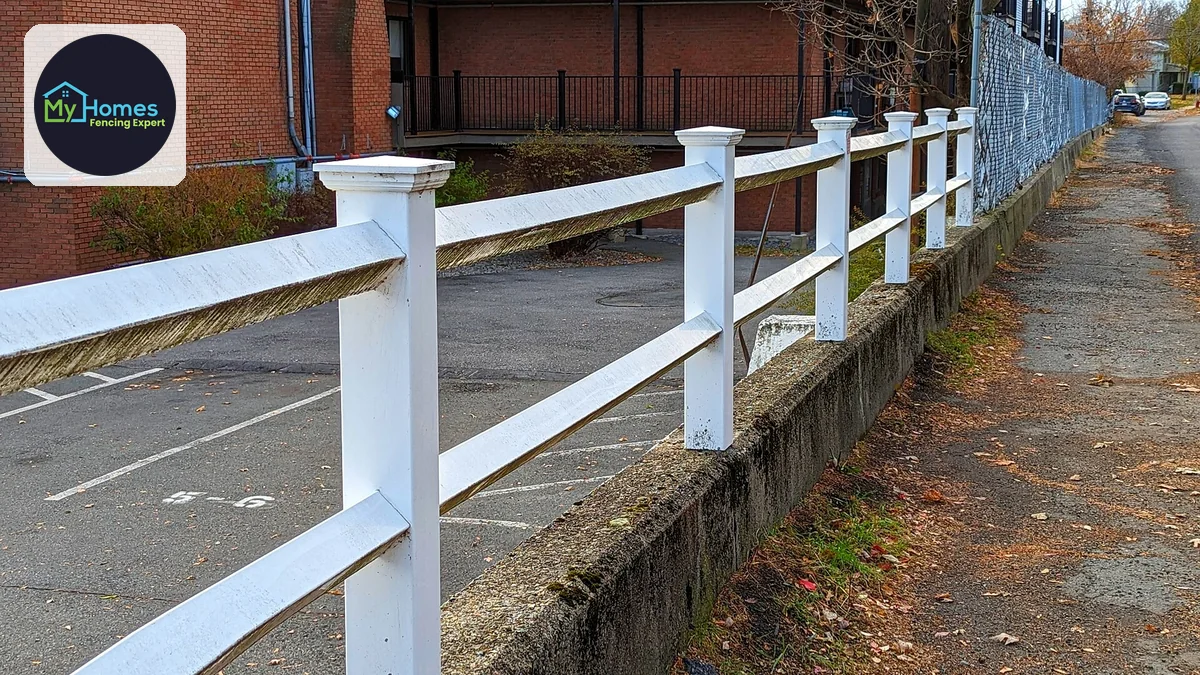
PVC is the other near-zero option and it is genuinely low effort — no rot, no rust, no coating, and it cleans with a hose. It is popular on rentals and around pools for exactly that reason, and it holds a clean white or light colour that timber cannot without repainting.
The variable that decides whether PVC delivers is UV stabilisation. New Zealand's ultraviolet is harsh for our latitude, and vinyl formulated for milder markets chalks, fades and eventually goes brittle here — at which point a knock from a wheelbarrow cracks a panel that should have flexed.
So PVC's maintenance profile is essentially binary. Good product: near zero for decades. Poor product: near zero for a few years, then replacement. You cannot tell them apart from the sample, so judge it by the warranty terms and whether the supplier has product that has actually stood in New Zealand sun for a decade.
SmartWall and Solid Systems
SmartWall and rendered masonry-style systems give a solid, substantial boundary with very little ongoing work — no coating cycle, nothing to rot, and mass that delivers privacy and some genuine sound attenuation that lighter fences cannot.
The maintenance that does exist is different in kind rather than amount. Rendered surfaces can be washed and, over a long enough period, may want refreshing. More importantly, these systems are unforgiving of ground movement: they are rigid, so a footing problem shows as a crack rather than a lean, and cracks are a harder repair than a replaced paling.
That makes the installation quality disproportionately important here. Done properly on adequate footings, a solid system is among the lowest-maintenance boundaries available. Done cheaply on marginal ground, it produces the one maintenance problem on this page that is genuinely expensive to fix.
Composite: The Middle Ground
Composite sits between timber and plastic: warmer and more natural-looking than PVC, considerably more stable than timber, and generally free of the coating cycle. For owners who want the timber look without the timber workload, it is the closest match.
It is not entirely work-free. Composite holds surface dirt and can grow mould in shaded damp positions much as timber does, so it wants an occasional wash — but that is cleaning rather than protecting, and skipping it costs appearance rather than life.
The two things to check are recycled content, which varies enormously between products carrying the same label, and how the product handles heat, since composite expands and contracts more than timber and needs installing with that allowed for.
Making Timber Genuinely Lower-Maintenance
Timber will always ask more than the materials above, but the gap is far smaller than most people assume, and most high-maintenance timber fences were made that way by decisions at install rather than by being timber.
The biggest single choice is stain over paint. Stain penetrates and fades, so re-coating is a wash and another coat with nothing to strip. Paint sits on the surface as a film and eventually peels, which means scraping, sanding and priming — the difference between a manageable job and one you keep postponing.
After that it is detailing. H4 posts with sealed cut ends and drainage beneath them remove the rot problem. A gravel board or a base detail that keeps palings out of wet soil removes the next one. And leaving the fence accessible — not hard against a hedge or a bank — is what makes the remaining work something you will actually do.
Access Is the Hidden Variable
Here is the point that changes more decisions than material comparisons do: how much maintenance a fence needs matters far less than whether you can realistically do it. A boundary you can walk along with a brush is low-maintenance almost regardless of material. A boundary behind established planting, above a bank, or where the far face is only reachable from a neighbour's property is high-maintenance whatever it is made of.
The practical implication is that most properties should not choose one material for the whole section. Put the genuinely low-maintenance material where access is hard, where salt lands, and where you would never get to the far side — and spend less on the runs you can easily reach.
Be honest about the version of yourself who will own this fence in five years, too. If a timber fence was going to be left to grey off regardless, its low upfront cost is real and its maintenance schedule is theoretical. My Homes Fencing Expert will walk the boundaries with you and match the spend to the access and exposure rather than selling one material for everything. Call 022 315 8987 or book a free, no-obligation site visit.
Frequently Asked Questions
Aluminium, because it removes three of the four sources of fence work at once — no coating cycle, no rust, nothing to rot. Quality PVC and SmartWall are close behind. All of them still have gate hardware, which is the one maintenance item you can't design away.
Less than its reputation, and most high-maintenance timber fences were made that way at install. Stain rather than paint, H4 posts with sealed cuts and drainage, and a base detail keeping palings out of wet soil turn it into an occasional re-coat rather than a chore.
Stain, clearly. It penetrates and fades, so re-coating is a wash and another coat with nothing to strip. Paint forms a surface film that eventually peels, meaning scraping, sanding and priming — which is the job people postpone until the fence looks terrible.
It is if the grade is right. Its maintenance profile is essentially binary: UV-stabilised product for New Zealand conditions asks almost nothing for decades, while vinyl formulated for milder markets chalks and goes brittle here. Judge by warranty terms, not by the sample.
Very little day to day — no coating cycle and nothing to rot, plus mass that gives privacy and real sound attenuation. The catch is that it's rigid, so ground movement shows as a crack rather than a lean. Installation quality on the footings matters more here than with any other option.
Usually, if you'd genuinely have neglected the alternative — and especially where access is hard or salt is involved. If a timber fence was going to be left to grey off anyway, its low upfront cost is real and its maintenance schedule was always theoretical.
Often not. How much maintenance a fence needs matters less than whether you can reach it to do it. Put the low-maintenance material where access is hard, where salt lands, or where the far face is only reachable from a neighbour's land — and spend less on the easy runs.
Ready to start your fencing project?
Get a free, no-obligation quote anywhere in Auckland.
Get a Free QuoteRelated fencing services