Article summary
Powder-coated aluminium fence guide: how the finish works, colour options, durability in Auckland sun and salt, and the care that keeps it sharp.
- Category:
- materials
- Read time:
- 4 min
- Published:
- 6 July 2026
- Written by:
- My Homes Fencing Expert
When people say they love the look of modern aluminium fencing, what they're mostly admiring is the powder coat — that deep, even, slightly soft-sheen finish that wet paint never quite matches. A powder-coated aluminium fence is really two products working together: a metal that can't rust, wearing a finish engineered to outlast paint by years.
This guide explains how powder coating actually works, what the colour and finish options are, how it stands up to Auckland's UV and salt, and the small amount of care that keeps it looking installed-yesterday for a very long time.
What Is a Powder-Coated Aluminium Fence?
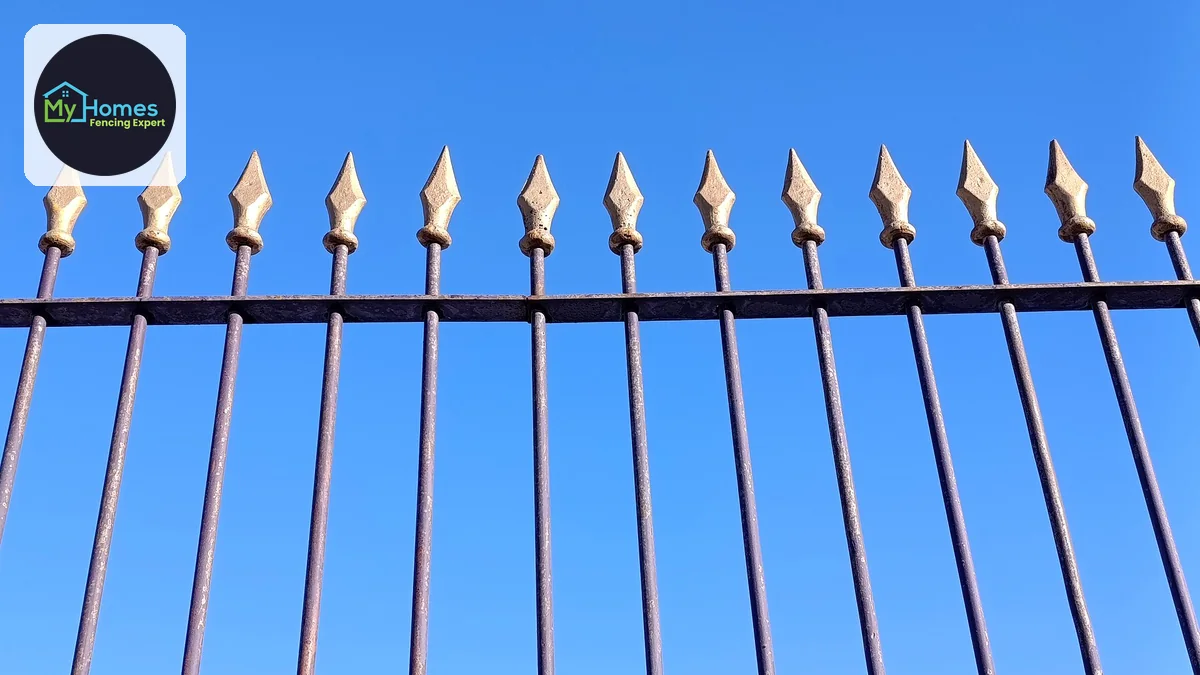
In short: powder coating is a dry finishing process — pigmented powder is applied electrostatically to the aluminium, then baked so it fuses into a continuous, bonded skin. No solvents, no brush marks, no drips; a factory finish that wraps every face and edge evenly.
That baked bond is why powder coat outperforms site-applied paint: it's harder, more uniform, and far more resistant to chipping, fading and weathering.
On fencing, it means the finish you see at installation is the finish — there is no repaint cycle in the product's life plan.
Colours, Textures and the Woodgrain Option
Standard ranges cover the colours Auckland fencing actually wears: blacks, charcoals, greys, whites and bronzes, frequently matched to common roofing and joinery palettes so fence, roof and window frames can share a tone.
Textures vary from smooth gloss to matt and fine-textured finishes that hide fingerprints and water spotting — worth seeing in person, because texture changes how a colour reads in sunlight.
Woodgrain-effect coatings give slat fencing a timber look with aluminium behaviour. They cost more and divide opinion up close, so judge a real sample against your house before committing.
Durability: Sun, Salt and Scratches
Quality architectural powder coats are formulated for UV stability — holding colour through years of New Zealand sun, with darker tones showing wear slowest of all finishes in their class. Manufacturers typically back their systems with warranties; ask what applies to the product being quoted.
Coastal performance is the headline act: the coating shields an already rust-proof metal, so salt air's worst outcome is surface grime rather than corrosion. It's why aluminium owns Auckland's beach-suburb fencing.
Scratches are cosmetic, not structural — exposed aluminium doesn't rust the way scratched steel does. Touch-up paints in matching colours tidy the visible ones.
The Care Routine (It's Short)
Wash the fence with fresh water and a soft brush or cloth a few times a year — more often near the coast, and especially on sheltered faces rain never rinses, where salt and grime quietly accumulate.
Skip the harsh stuff: abrasive pads, strong solvents and aggressive waterblasting can dull or damage the finish that's doing all the work. Mild detergent handles anything a hose won't.
That's genuinely the whole programme — our aluminium cleaning guide walks through it step by step.
Specification Questions Worth Asking
Not all powder coats are equal. Ask whether the system is an architectural-grade coating, what pre-treatment the aluminium receives before coating (the unglamorous step that decides adhesion), and what the manufacturer's warranty covers for your distance from the sea.
Coastal addresses sometimes warrant higher-specification coating classes — a small premium that buys margin where salt is part of daily weather.
And whatever the coating, the fixings rule still applies: stainless or marine-grade screws and hardware near the coast, every time.
See the Finish on Your Boundary
My Homes Fencing Expert installs powder-coated aluminium fencing, gates and pool barriers across Auckland, with colour samples you can hold against your cladding before deciding anything.
Call 022 315 8987 or book a free, no-obligation quote online — and if your address ends in a beach, say so; we'll spec the coating class and fixings for the air it'll live in.
Frequently Asked Questions
Quality architectural coatings hold their colour and finish for many years — typically backed by manufacturer warranties — and the aluminium beneath can't rust regardless. A simple wash routine is what keeps the finish at its best.
It's not designed to need it, and the factory finish is the product's best state. Matching touch-up paints handle scratches; full colour changes are possible but a specialist job — choose the colour as a long-term decision.
No — exposed aluminium forms its own protective oxide rather than rusting, so scratches are cosmetic. Touch-up paint tidies them visually; there's no corrosion clock ticking underneath.
Standard ranges centre on blacks, charcoals, greys, whites and bronzes, often aligned with common roofing palettes, plus textured and woodgrain-effect options at a premium. Standard stocked colours are the most economical.
It's the benchmark — a coating engineered for exposure over a metal that can't rust. Specify stainless fixings, consider higher coating classes very close to the sea, and keep up the freshwater rinse on sheltered faces.
Ready to start your fencing project?
Get a free, no-obligation quote anywhere in Auckland.
Get a Free QuoteRelated fencing services