
Article summary
What's the best fence for windy sites? Wind-smart designs for exposed Auckland sections — semi-open styles, post engineering and gate details.
- Category:
- materials
- Read time:
- 5 min
- Published:
- 12 July 2026
- Written by:
- My Homes Fencing Expert
Auckland does wind with enthusiasm — northerlies barrelling across the harbours, sou'westers funnelling up gullies, and exposed ridgelines from Massey to Glenfield that feel every system that passes. Choosing the best fence for windy sites is less about brand or material and more about one piece of physics: a solid fence is a sail, and the wind will treat it like one.
After years of post-storm repair calls across the region's exposed suburbs, here's what actually survives: the designs that let wind through, the engineering that anchors what doesn't, and the details — gates especially — that decide whether a gale is an event or an invoice.
What's the Best Fence for Windy Sites?
In short: semi-open designs — slat fencing with gaps, shadowbox timber, trellis-topped lower fences — are the best fences for windy sites, because they bleed pressure instead of catching it. Fully solid fences can absolutely work on exposed ground, but only with footings and posts engineered for the load they'll carry.
The worst performer is the in-betweener: a solid fence built to calm-site standards on an exposed ridgeline. Auckland's storm seasons audit those reliably.
Wind exposure should be one of the first things named at your site visit — it changes the right answer for both design and structure.
Why Gaps Beat Mass in a Gale
Wind load on a fence scales with the area it can push on. A slatted or shadowbox fence with genuine airflow passes a meaningful share of each gust straight through, cutting the force the posts must resist — while still screening sightlines effectively.
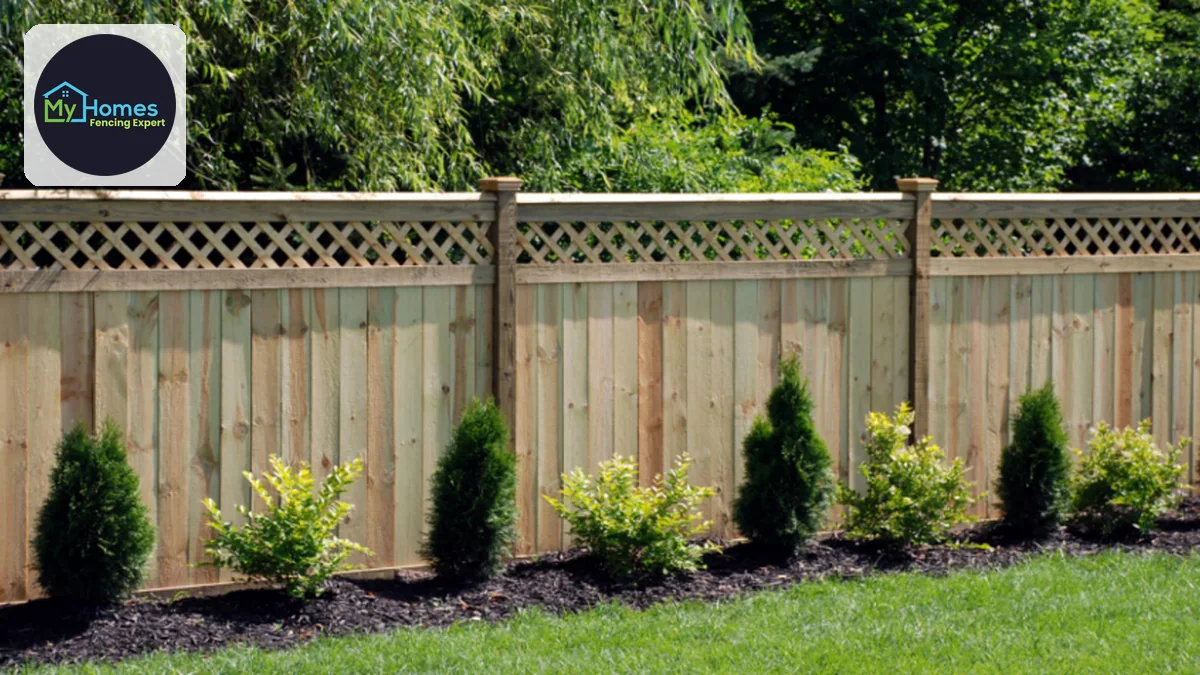
Shadowbox timber (palings alternating on each side of the rails) is the classic wind-country privacy fence: visually solid from any angle, breathable in a blow. Aluminium slat achieves the same with crisper lines.
Bonus: those gaps also tame the wind on your side of the fence. Solid barriers create swirling turbulence behind them; permeable fences genuinely shelter gardens and decks better.
Engineering Solid Fences for Exposure
Sometimes solid is the brief — noise, full privacy, a SmartWall look — and exposed sites can carry it with the structure scaled up: deeper posts, larger concrete footings, closer post spacings, and rail systems that transfer load properly.
Height multiplies everything: each step toward 1.8 metres and beyond adds lever-arm to every gust, which is why tall solid fences on ridgelines deserve genuinely conservative engineering.
This is exactly the structure cheap quotes quietly omit, and exactly where the post-storm repair calls begin. Our storm-damage guide is the after-photo of this paragraph.
Materials Under Wind: A Quick Audit
Aluminium slat: excellent — light, permeable options, no panel drumming. Shadowbox timber: excellent, with quality fixings so palings stay attached in gusts. Trellis: good as a topper on sound posts, poor as a tall standalone in exposure — it's a light structure.
Solid steel panels: strong but loud in gusts (drumming) and full sail area — engineer accordingly. PVC privacy panels: fine when the system is rated and posts are scaled up; rigid panels transfer all load to the structure.
Whatever the material, fixings finish the job: gust-cycling works fasteners loose over years, so quality screws beat nails on exposed runs.
Gates, Toppers and the Small Stuff Wind Finds
Gates are wind's favourite toy: a gust catches an unlatched gate and tests its hinges in one slam. Exposed sites want self-latching hardware, gate stops, and drop bolts for the open position — small parts that prevent the most common wind damage we repair.
Toppers added for privacy raise the sail area on posts never sized for it; on windy ground, have the posts assessed before the topper goes up.
And mind the neighbour's trees: wind plus overhanging limbs is a fence claim waiting for a date. Our prevention thinking on that lives in the maintenance cluster.
Build for Your Wind, Not the Brochure's
My Homes Fencing Expert builds across Auckland's exposed west, ridgelines and coastal edges, and we design for the gusts your specific site actually sees — including telling you when semi-open will serve your privacy better than solid.
Call 022 315 8987 or book a free, no-obligation quote online — mention the wind when you do, and we'll bring the right designs to the first visit.
Frequently Asked Questions
Semi-open designs — slat fencing with genuine gaps, shadowbox timber, trellis tops on lower fences — because they pass wind through rather than catching it. They also shelter your garden better than solid barriers, which create turbulence behind them.
Yes, with the structure scaled for the load: deeper posts, bigger footings, closer spacings and quality rail systems. The failures come from solid fences built to calm-site standards — exactly the corner cheap quotes cut.
It does — alternating palings on each side of the rails block direct sightlines from any normal angle while leaving airflow paths through. It's the traditional wind-country answer to the privacy fence brief.
Because it's the moving part — a gust catching an unlatched gate slams its full force into the hinges and posts. Self-latching hardware, gate stops and drop bolts are cheap insurance on exposed sites.
Not by rules, but by physics and budget — every extra height adds leverage to every gust, demanding more structure. On very exposed ground, a 1.6-metre well-engineered fence often outlives an ambitious 2-metre one.
Ready to start your fencing project?
Get a free, no-obligation quote anywhere in Auckland.
Get a Free QuoteRelated fencing services