Article summary
Compare timber, aluminium, PVC, and steel fencing for durability against Auckland's rain, humidity, and coastal salt air.
- Category:
- materials
- Read time:
- 8 min
- Published:
- 26 March 2026
- Written by:
- My Homes Fencing Expert
Quick answer: for most of Auckland, well-treated timber remains the best all-round value, but the smart choice depends on your microclimate. On exposed coastal boundaries with salt air, aluminium and PVC outlast timber and steel; in sheltered inland suburbs, treated timber or SmartWall gives the best balance of looks, privacy and cost. Matching the material to your site's exposure matters far more than picking one 'best' material overall.
New Zealand's climate is hard on fences — high rainfall, humidity, strong UV and, near the coast, salt-laden air each attack different materials in different ways. Here's how the main options actually hold up around Auckland.
Start With Your Corrosion Zone, Not the Material
The most useful question isn't "which fence material is best in New Zealand" — it's "how corrosive is the air on this particular boundary". New Zealand building practice already answers that with exposure zones: broadly sheltered inland conditions, a general coastal band, and a severe sea-spray band closest to breaking surf. Auckland, being a city on an isthmus with two harbours and a west coast, contains all three within a short drive.
That geography is why blanket advice fails here. A boundary in Titirangi or Mount Albert is sitting in genuinely mild conditions; a boundary at Piha, Muriwai or the seaward edge of Maraetai is in one of the harsher marine environments in the country. The same fence built to the same spec will behave very differently on those two sites, and the difference shows up in years, not decades.
Before comparing materials, work out roughly where you sit: is there salt on the car windows in the morning, do the neighbours' steel fixings show rust bleed, does the wind come off open water? Those observations are more predictive of fence life than any brochure durability claim.
Treated Timber: The H-Rating Decides Everything
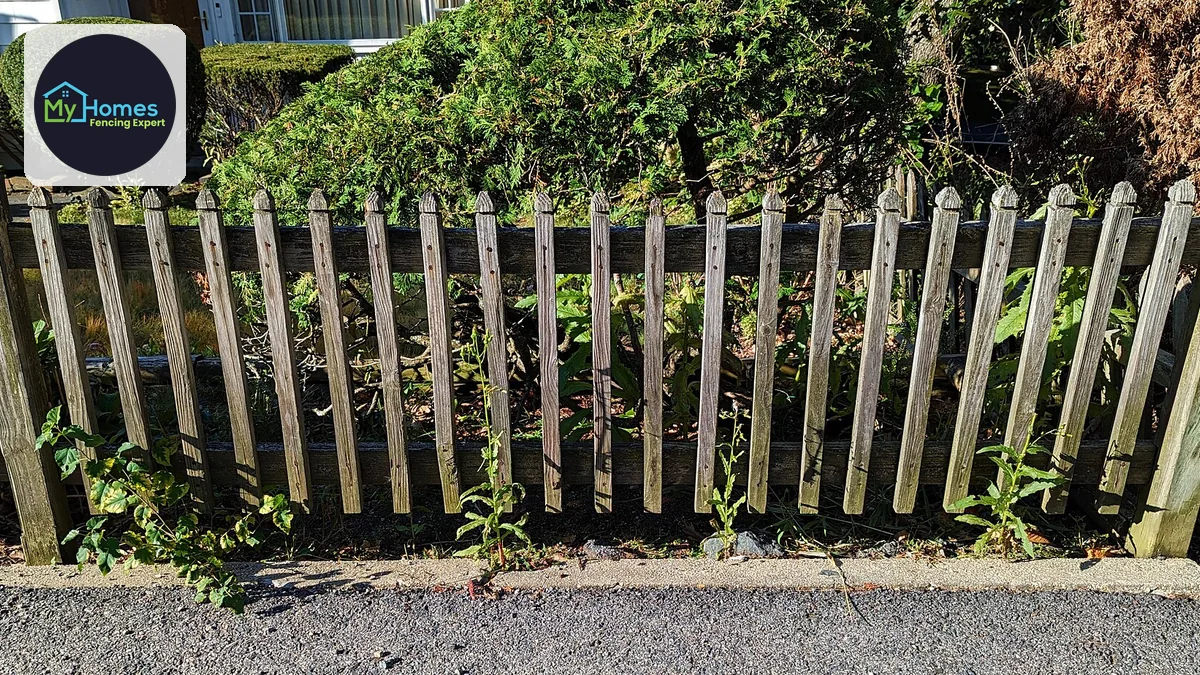
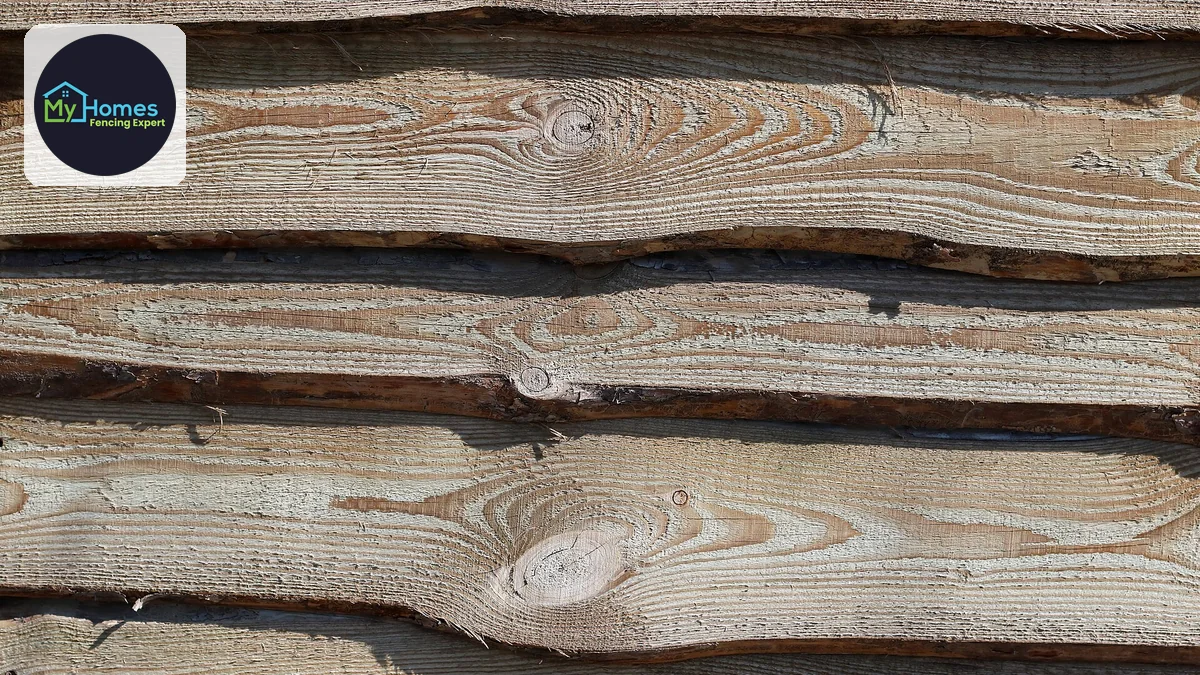
Treated radiata pine is still the default Auckland fence, and it deserves to be — it's affordable, easy to repair one board at a time, and it handles rain and humidity well when the treatment is right. The critical distinction is the hazard class. Anything permanently in the ground needs H4 treatment; rails and palings sitting above ground want H3.2. Getting this wrong is the single most common reason a timber fence fails early.
Almost every prematurely rotted fence we're called to repair failed at the same place: the post, at the soil line, where moisture and oxygen meet. Above-ground timber that greys off is cosmetic. A post that's gone soft at ground level is structural, and it usually means the fence was built with H3.2 posts, or with H4 posts that were cut to length on site and never had the fresh cut end sealed.
Timber's other honest weakness is that its lifespan is partly your responsibility. Left uncoated, a paling fence in Auckland's UV and damp will still stand for years but will look tired fast. Kept clean and re-coated on a sensible cycle, the same fence looks intentional for its whole life.
Aluminium: The Salt-Air Default
Aluminium doesn't rust. That single property is why it dominates coastal and pool fencing in Auckland. It forms its own stable oxide layer, and the powder-coat finish is baked on rather than brushed on, so there's no repainting cycle to fall behind on. On a boundary that gets salt spray, it removes the failure mode that ends most other fences.
The trade-offs are real but narrow. Aluminium costs more to supply and install than timber. Standard slat spacing gives filtered rather than full privacy, so if you want a solid screen you're looking at close-board or louvre profiles, which sit higher again in price. And because the strength comes from the extrusion rather than mass, a badly specified lightweight system on an exposed site can flex where a heavier one wouldn't.
Two details separate a good aluminium fence from a cheap one: the quality of the powder-coat system, and whether the fixings are stainless or at least properly compatible. Mixing dissimilar metals near salt air invites galvanic corrosion — the aluminium survives, but the screws bleed rust down your new fence.
PVC and Composite: UV Is the Real Test
PVC won't rot, won't rust, and cleans with a hose — genuinely low-maintenance, and popular around pools and on rental properties for exactly that reason. What separates good PVC from bad has almost nothing to do with rain and everything to do with ultraviolet light. New Zealand's UV is unusually harsh for the latitude, and cheap vinyl that was formulated for milder markets goes chalky and brittle here.
Quality profiles carry UV stabilisers and impact modifiers designed for this. They hold colour and stay flexible enough to take a knock from a wheelbarrow or a cricket ball without cracking. The way to tell them apart is not by looking at the sample in the yard — it's by asking what the warranty covers and for how long, and whether the supplier has product that has actually stood in New Zealand sun for a decade.
Composite products sit between timber and PVC: more natural in appearance, generally more UV-stable than budget vinyl, and heavier. They're a reasonable middle path where you want a low-upkeep fence but the plastic look doesn't suit the house.
Steel and Colour-Coated Panels: Mind the Cut Edge
Colour-coated steel panels give instant full privacy with no palings to nail and no gaps to open up over time, and the factory finishes are formulated for New Zealand conditions. Inland and suburban Auckland, they perform very well and need essentially no maintenance beyond an occasional wash.
Coastal steel is a different conversation. The coating class has to match the exposure, and — more importantly — every cut edge, drilled hole and scratch is a place where the protection stops and bare steel starts. Corrosion on coated steel fences almost never begins in the middle of a panel; it begins at an unsealed cut made on site. Prompt touch-up isn't fussiness, it's the whole maintenance regime.
One practical characteristic worth knowing before you commit: solid steel panels drum in strong wind more than timber palings do. On a sheltered suburban street this is a non-issue. On an exposed ridgeline it's worth discussing, because it's not something you can retrofit away.
Auckland Microclimates: Shade, Drainage and Wind
Distance from the sea is the headline factor, but it isn't the only one, and plenty of inland fences fail early for reasons that have nothing to do with salt. A south-facing boundary under mature trees that never gets direct sun stays damp year-round, grows moss and lichen, and works timber harder than a sunny fence two streets away.
Drainage matters just as much. Auckland's heavy clay soils hold water, and a post hole in clay can behave like a bucket — concrete around the post, water sitting in the bottom, timber standing in it. Good practice is to give the post base somewhere to drain to and to shape the concrete so water sheds away from the timber rather than pooling against it.
Wind is the third local variable. Exposed ridgelines and open western sites put real load on a solid fence, which is a post-spacing and footing question before it's a material question. A fully solid fence is a sail; the material choice matters far less than whether the posts were set to carry it.
Matching Material to Your Boundary
If we had to compress it: sheltered inland Auckland, treated timber or SmartWall gives the best balance of looks, privacy and value. General coastal exposure, quality steel or PVC both work with modest care. Genuine sea-spray positions and pool surrounds, aluminium is the material that stops the arguments.
Most properties aren't uniform, which is why a single answer for a whole section is usually the wrong answer. It's completely normal to run aluminium on the exposed seaward boundary and timber down the sheltered side, or to put a low-maintenance material where access is hard and timber where you can easily reach it to re-coat.
My Homes Fencing Expert assesses exposure, soil, shade and wind on site before recommending anything. Call 022 315 8987 or book a free, no-obligation quote and we'll tell you what your particular boundary actually needs — including when the cheaper material is the right one.
Frequently Asked Questions
Aluminium and quality PVC are the lowest-maintenance options — both resist rot and rust and need little more than an occasional wash, with no re-staining. They cost more upfront than timber but save years of upkeep.
Yes, when it's built right — in-ground posts should be H4-treated, above-ground rails and palings H3.2, and any cut end sealed before it goes in. Under-treated posts are what rot early in Auckland's damp, not the palings.
Aluminium is the standout for coastal sites because it doesn't rust in salt air, with quality PVC a close second. Coated steel works with a higher coating class and disciplined touch-up of cut edges; timber weathers faster the closer you are to the sea.
Because the soil line is where moisture, oxygen and timber meet. Palings dry out after rain; a post sitting in wet clay does not. Using H4 posts, sealing site-made cuts, and shaping the concrete so water sheds away rather than pooling is what prevents it.
Significantly. New Zealand's UV is harsh for its latitude, and it's the main thing that ages PVC and fades coatings and stains. Budget vinyl formulated for milder markets can go chalky and brittle here, which is why the UV stabilisation in the product matters more than the price.
Yes, and it's often the smart move. Running aluminium on an exposed seaward boundary and timber down a sheltered side matches spend to exposure. Keeping colour and height consistent is what makes a mixed-material boundary read as deliberate rather than patched.
Ready to start your fencing project?
Get a free, no-obligation quote anywhere in Auckland.
Get a Free QuoteRelated fencing services