Article summary
What does a timber fence cost in Auckland? See the real cost drivers — fence height, timber grade, ground conditions, access and old fence removal.
- Category:
- cost
- Read time:
- 6 min
- Published:
- 4 May 2026
- Written by:
- My Homes Fencing Expert
If you're pricing a new boundary or front fence, timber is usually the first material Auckland homeowners consider — and timber fence cost in Auckland varies more than most people expect. Two fences of exactly the same length can come in at very different prices once height, timber grade, ground conditions and site access are factored in.
This guide breaks down the cost drivers our West Harbour-based team sees on quotes every week, so you can read your own quotes with confidence. There's no single magic per-metre number, but by the end you'll know exactly why one timber fence costs more than another — and where you can genuinely save.
What Does a Timber Fence Cost in Auckland?
In short: it depends on five things — length, height, timber specification, ground conditions and site access. Most residential timber fences in Auckland are quoted on a per-metre basis, with that rate moving up or down as those five factors change.
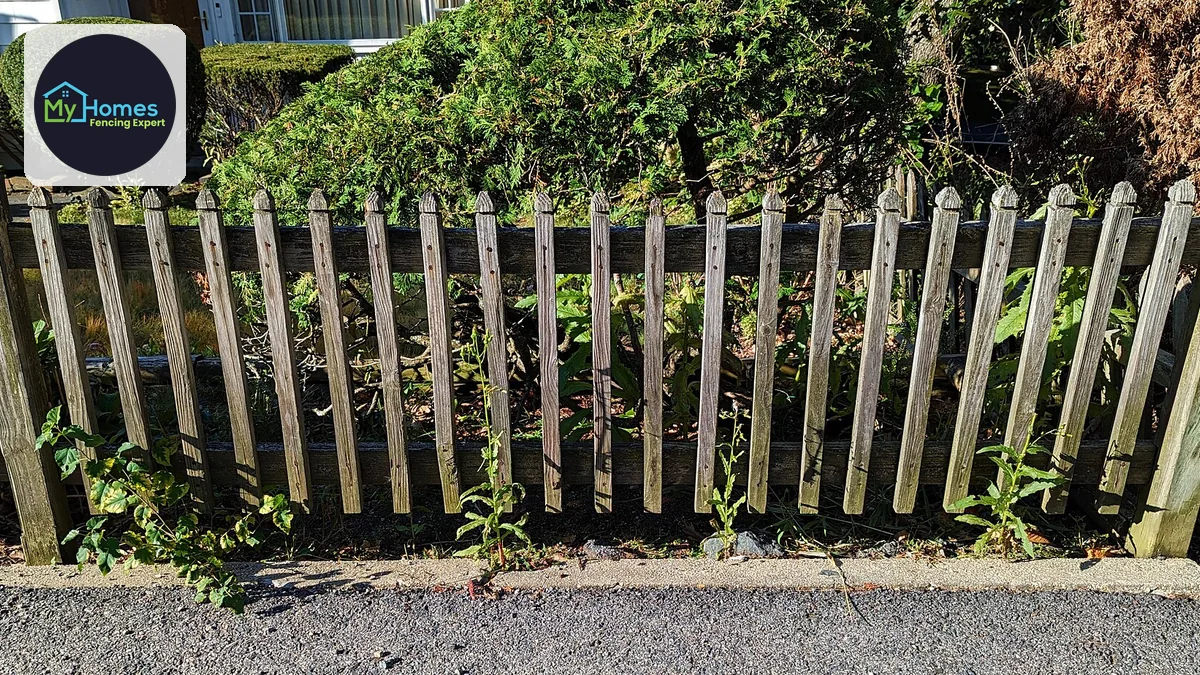
A 1.2-metre paling fence on flat, clear ground sits at the affordable end of the market. A 1.8-metre lapped privacy fence with capping, built on a sloping clay section with tight access, costs considerably more per metre. Both are timber fences, which is why headline prices you see online can be misleading.
The only number you can rely on is a written quote based on your actual site. Anything else is an estimate with assumptions built in — useful for budgeting, but not for committing.
Height and Style: The Biggest Price Levers
Going from a 1.2-metre fence to a 1.8-metre privacy fence increases more than just the palings. Taller fences usually need three rails instead of two, longer posts, and deeper post holes to handle wind loading — so the cost rises faster than the height does.
Style matters too. A standard vertical paling fence is the most economical timber build. Lapped palings (where boards overlap for full privacy), board-and-batten, and shadowbox designs all use noticeably more timber and labour. Capping rails and exposed-post detailing look sharp but add material and time.
If budget is tight, a standard paling fence at the height you actually need — rather than the maximum — is usually the best value starting point.
Timber Grades and Treatment Levels
Fence timber in New Zealand is treated to different hazard levels. Posts that go into the ground need a higher treatment level (commonly H4) than rails and palings (commonly H3.2), and that treatment is part of what you're paying for.
Cheaper, lower-grade timber can look fine on day one but tends to warp, twist and split sooner in Auckland's humid, wet climate. Premium options like cedar cost more upfront and are usually chosen for feature fences and screens rather than long boundary runs.
Paying for correctly treated, well-seasoned pine is rarely wasted money — it's the difference between a fence that lasts decades and one that needs repairs within a few years.
Ground Conditions: Clay, Rock and Slope
Auckland ground is rarely simple. Much of the region sits on clay that turns hard in summer and soft in winter, while parts of the central isthmus hide volcanic rock just below the surface. Difficult digging means more time per post hole, and sometimes machinery or extra concrete.
Slopes add cost in a different way. A sloping fence line needs to be either stepped or raked, both of which involve more measuring, cutting and adjustment than a straight run on flat ground.
This is why a site visit matters. A fencer who quotes without seeing your ground is either padding the price to cover the unknown, or planning to add variations later.
Access, Old Fence Removal and Site Extras
If the old fence has to come out first, removal and disposal time is part of your price — old concrete footings in particular can be slow to break out. Tight side access means materials get carried by hand rather than delivered to the fence line, which adds labour hours.
Gates are priced separately from fence runs because they involve hinges, latches, extra framing and careful hanging. A fence with two gates will always cost meaningfully more than the same fence with none.
None of these extras are padding — they're real work. A good quote will itemise them so you can see exactly where the money goes.
How to Keep Timber Fencing Costs Down
Build to the height you need, not the maximum. Choose a standard paling style for long boundary runs and save feature detailing for street-facing sections. Clear vegetation and obstacles from the fence line yourself before the crew arrives.
If the fence sits on a shared boundary, talk to your neighbour early. Under New Zealand's Fencing Act 1978, neighbours often share the cost of an adequate boundary fence — the process has specific steps, so confirm how it applies to your situation before assuming a split.
Finally, don't cut the things that protect your investment: proper post depth, quality fixings and correct timber treatment. Saving there is how cheap fences become expensive ones.
Getting an Accurate Timber Fence Quote
My Homes Fencing Expert provides free, no-obligation timber fence quotes across Auckland. We measure your site, check ground and access, talk through height and style options, and give you a clear written quote with no surprises.
Call 022 315 8987 or request a free quote online — our team covers everything from single boundary runs in West Auckland to full-property fencing anywhere in the region.
Frequently Asked Questions
For a full-height boundary fence, timber is usually among the most affordable options upfront. PVC and aluminium often cost more to install but need less maintenance, so it pays to compare lifetime cost as well as the initial quote.
Yes — meaningfully more. A 1.8-metre fence uses longer palings, typically three rails instead of two, longer posts and deeper holes, so the price rises faster than the height increase suggests.
Often, yes. The Fencing Act 1978 generally provides for neighbours to share the cost of an adequate boundary fence, but there's a formal process and exceptions apply, so confirm how it works for your property before relying on a 50/50 split.
It's an additional cost, but it protects the timber and extends the fence's life. We can quote building and finishing together so you can see the complete picture, or you can stage the finishing work for a later date.
Book a free on-site assessment. We measure the fence line, check ground conditions and access, and provide a written, itemised quote — with no obligation to proceed.
Ready to start your fencing project?
Get a free, no-obligation quote anywhere in Auckland.
Get a Free QuoteRelated fencing services