Article summary
Secure, gap-free fencing options designed to keep your pets safely contained in the yard.
- Category:
- design
- Read time:
- 9 min
- Published:
- 15 May 2025
- Written by:
- My Homes Fencing Expert
Quick answer: the best pet fencing is tall enough that your dog can't jump it, has gaps too small to squeeze through, and — crucially — is sealed at the bottom so a digger can't get under. Solid timber or close-board fencing suits most dogs; for jumpers, go taller (or angle the top inward), and for diggers, run the fence to the ground with a buried barrier or ground rail. Match the height and gaps to your specific pet.
Containing a pet safely is about closing the three escape routes — over, through and under. Here's how to fence for it in an Auckland yard.

Over, Through, Under — Close All Three
Every pet escape uses one of exactly three routes: over the top, through a gap, or under the bottom. That is the whole problem, and the reason so many fences fail at containment is that owners solve for one route and leave another wide open. A beautifully built 1.8-metre fence stops nothing if there is a 120mm gap under it where the ground falls away.
Work through all three deliberately before you build, and be specific about the animal you actually have rather than dogs in general. A Border Collie, a Beagle and a French Bulldog present three completely different containment problems, and the fence that solves one may be irrelevant to another.
It also pays to watch what your pet already does. Dogs are creatures of routine, and an escape artist almost always has a preferred method and a preferred spot. Fixing that spot properly beats upgrading the entire boundary.
Height: Be Honest About What Your Dog Can Do
Most dogs are comfortably contained by a standard 1.8-metre boundary fence, and for the large majority of Auckland households that is the end of the height conversation. The exceptions are real though: athletic working breeds, sighthounds, and any dog that has already learned it can get out.
The important distinction is between jumping and climbing, because they need different answers. A jumper clears the fence in one movement and is defeated by height, or better, by a top section angled inward that removes the landing. A climber uses the fence itself — scrambling up palings, using a rail as a foothold — and extra height alone just gives them more to climb.
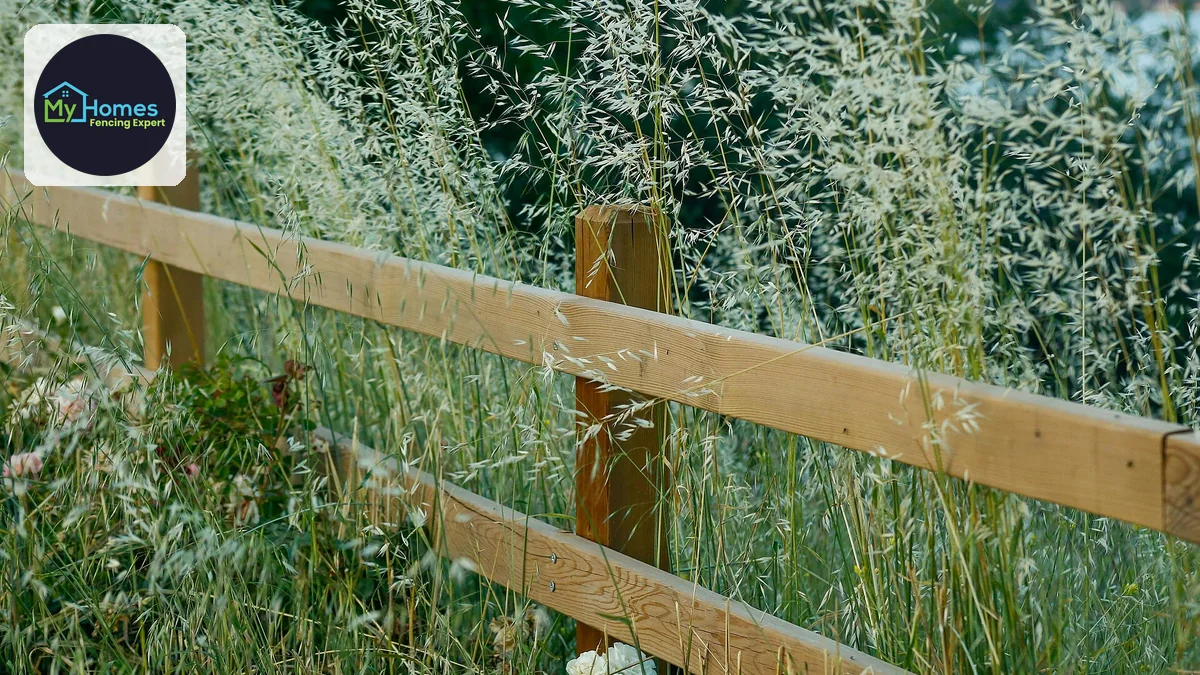
For climbers, remove the footholds. Rails on the inside face are a ladder; put them on the neighbour's side or use a design without a usable horizontal edge. This is the same principle as the non-climbable zone required around pools, applied to a different problem.
The Bottom Edge Is Where Most Fences Fail
Under is the most common escape route and the most commonly ignored. Standard fencing practice leaves a deliberate gap at the bottom to keep timber out of wet soil, which is good for the fence and a straightforward invitation to a digger.
Sloping ground makes it worse. Auckland has a lot of sections that fall away along a boundary, and where a fence runs level over uneven ground, you get triangular gaps under each bay. These get larger over time as soil settles and rain washes material out, and they are usually the exact spot where a dog gets out.
There are three practical fixes. A ground rail or gravel board seals the bottom line while keeping palings clear of the soil. A buried barrier — mesh turned outward at the base, in an L shape — defeats digging because the dog digs down onto it. Or a strip of paving or concrete along the base, which is the most durable answer and doubles as a mowing edge.
Gap Spacing: Measure the Head, Not the Body
The rule with through-gaps is that if the head fits, the animal fits. Dogs and cats will push through a gap that looks impossibly narrow, and puppies and small breeds routinely get through spacing that seems perfectly safe when you look at the adult animal.
Which raises the point people forget: puppies grow. Fencing designed around a six-month-old is fine, but fencing designed around a full-grown dog can leave a puppy able to walk straight through for its first year. If you are fencing before the animal is fully grown, spec for the puppy.
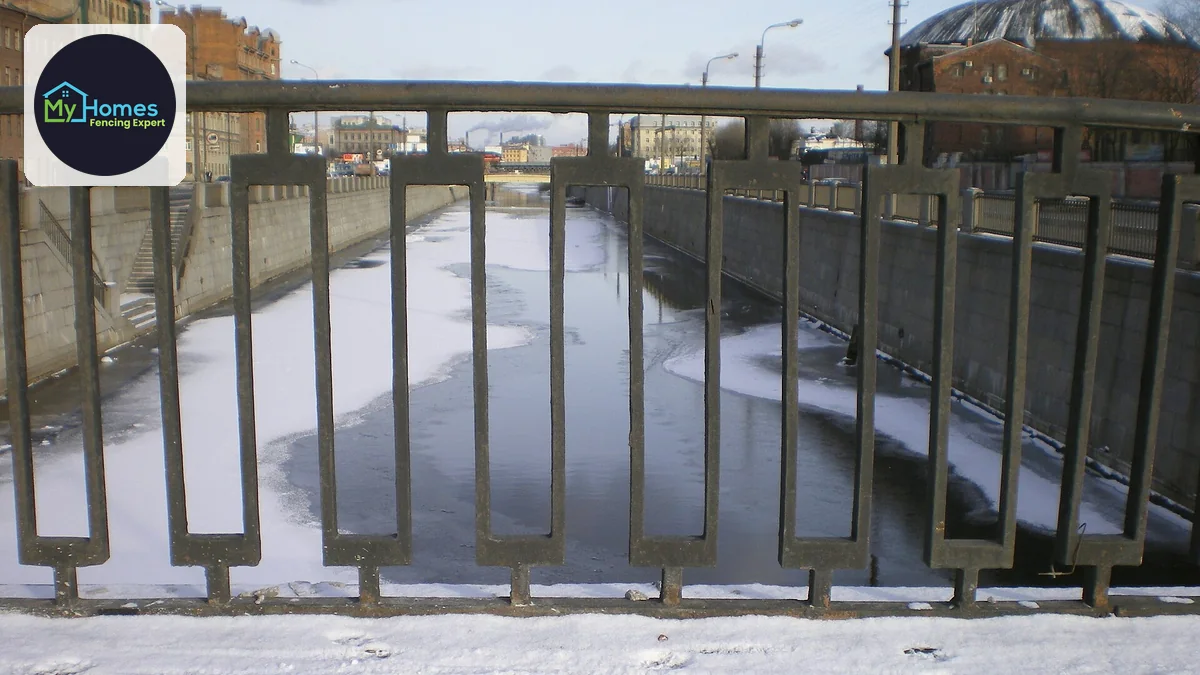
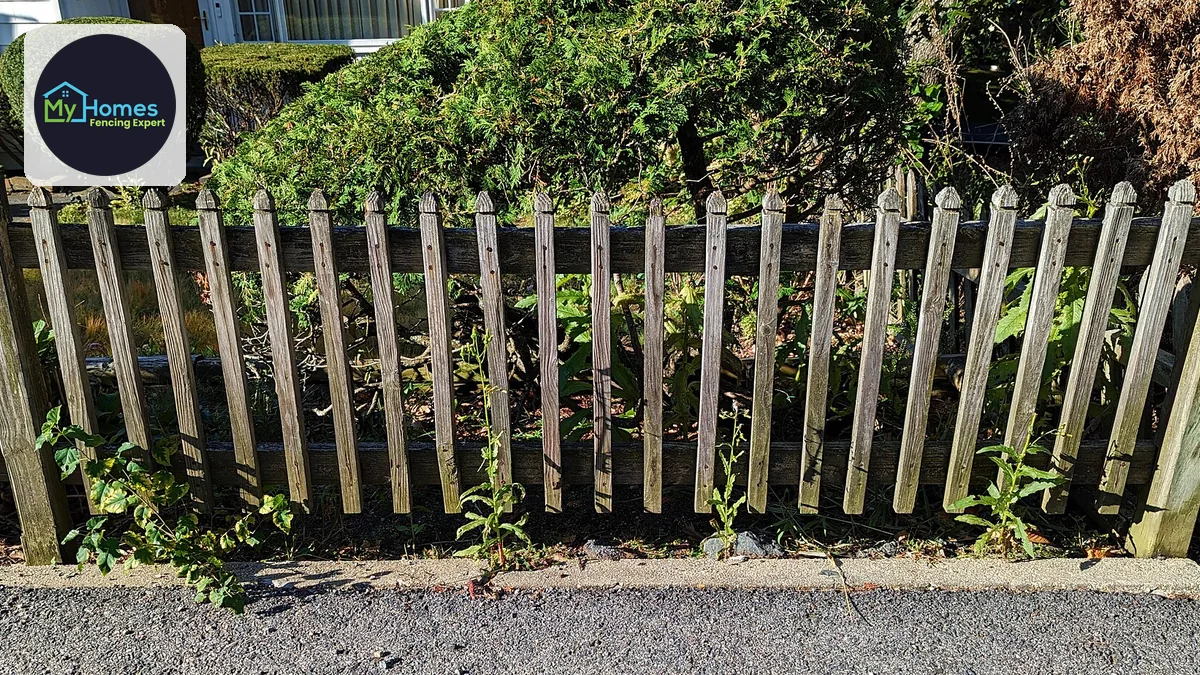
Close-boarded timber, solid panels and tight pickets are the safe defaults. Widely spaced slats, post-and-rail alone, and decorative panels with ornamental openings are the ones to check carefully. Aluminium and metal fencing works well for pets provided the slat spacing genuinely suits the animal — the standard spacing suits medium and large dogs better than small ones.
Solid or See-Through? The Frustration Problem
There is a real behavioural argument for solid fencing that goes beyond containment. A dog that can see a constant stream of passing dogs, cats and people through the fence — and can never reach any of them — can develop what trainers call barrier frustration, which often looks like escalating barking, fence-running and lunging at the boundary.
Blocking the view frequently reduces the behaviour dramatically, and it reduces the motivation to escape at the same time. For dogs that patrol a road-facing boundary all day, going solid is often the single most effective change an owner can make.
The counter-argument is that some dogs are calmer when they can see what is happening and are more anxious when they cannot. This one genuinely depends on the animal, and it is worth thinking about which pattern yours fits before committing to a design.
Gates: The Single Most Common Failure Point
Ask anyone whose dog has got out and the answer is usually the gate. Not because gates are poorly built, but because gates are operated by people — visitors, couriers, tradespeople and children — and a gate left ajar defeats a perfect fence instantly.
The fix is hardware, not vigilance. Self-closing hinges mean the gate shuts whether or not the person thinks about it. A latch that operates positively rather than resting on a catch means it stays shut. And a latch mounted where a child cannot casually reach it removes the most common accidental opening.
The other gate detail is the gaps. A gate needs clearance to swing, so there is almost always a gap at the hinge side, the latch side and underneath. Each one is a potential escape route for a smaller animal, and each needs the same scrutiny as the fence itself.
Cats and Small Pets Are a Different Job
Cats will climb essentially anything, so height and solidity — the two things that contain dogs — do very little. Containing a cat requires defeating the climb at the top, which means specialised angled or curved toppers, or netted enclosure systems, rather than a taller fence.
This is worth being upfront about, because owners regularly spend money on a tall solid boundary expecting it to keep a cat in and are disappointed. A standard fence, however well built, is not a cat containment system.
Rabbits and other small pets sit at the opposite extreme — the problem is not height at all but gaps and digging, and containment usually means fine mesh, a buried barrier, and attention to spacing measured in millimetres rather than the standard fence gaps.
Your Responsibility as an Auckland Dog Owner
This is not only a convenience question. Under New Zealand's dog control law, owners are required to keep their dog controlled and confined within the property so it cannot roam, and a wandering dog can result in infringement action, impounding fees, and a much more serious situation if the dog causes harm or an accident while loose.
A dog that repeatedly escapes is therefore a compliance issue as well as a stressful one, and the responsibility sits with the owner rather than with the fence contractor. That is worth knowing before you decide a marginal gap is probably fine.
My Homes Fencing Expert will design the height, spacing, base detail and gate hardware around your specific animal rather than fitting a standard fence and hoping. Tell us the breed and what it has already got away with. Call 022 315 8987 or book a free, no-obligation site visit.
Frequently Asked Questions
A standard 1.8m fence contains most dogs. The exceptions are athletic breeds and any dog that has already learned it can escape. For jumpers, add height or angle the top inward to remove the landing; for climbers, height alone doesn't help — you need to remove the footholds.
Three options that work: a ground rail or gravel board sealing the bottom line, mesh buried in an L shape turned outward so the dog digs down onto it, or a strip of paving along the base. Sloping boundaries need the most attention, since gaps open up under each bay.
If the head fits, the animal fits — and animals push through gaps that look impossibly narrow. Spec for the smallest size the pet will ever be, not the size it is now, because a fence built around an adult dog can let a puppy walk straight through for its first year.
Solid helps most dogs, because constantly seeing passing dogs and people they can never reach drives barrier frustration — barking, fence-running and escape attempts. Some dogs are calmer being able to see out, so it depends on the animal, but for a road-facing boundary solid is usually the better bet.
Because gates are operated by people who forget. The answer is hardware rather than reminders: self-closing hinges so it shuts by itself, a positive latch that can't rest on a catch, and mounting it out of easy reach of children. Also check the hinge-side, latch-side and under-gate gaps.
No. Cats climb almost anything, so height and solidity do very little. Cat containment needs the climb defeated at the top — angled or curved toppers, or a netted enclosure system. A tall solid boundary fence is not a cat containment system, however well built.
Yes. Dog control law requires owners to keep their dog confined to the property so it can't roam, and a wandering dog can mean infringement action and impounding fees — far more serious if it causes an accident or harm. The responsibility sits with the owner, not the fence.
Ready to start your fencing project?
Get a free, no-obligation quote anywhere in Auckland.
Get a Free QuoteRelated fencing services