Article summary
PVC vs aluminium fence: two low-maintenance options compared on looks, impact resistance, coastal performance, styles and long-term value.
- Category:
- materials
- Read time:
- 7 min
- Published:
- 26 June 2026
- Updated:
- 2 November 2026
- Written by:
- Md Mahfuzur Rahman (Milton), Project Manager, My Homes Fencing Expert
This is the comparison for people who've already made the big decision — no more staining, no more painting, ever — and now face the subtler one. The PVC vs aluminium fence question is a contest between fencing's two great low-maintenance materials, and because both keep that promise well, the choice turns on style, toughness and the fine print of how each one ages.
Having installed and repaired both across Auckland, here's where they genuinely differ: the looks each one owns, how they take a knock, how they handle our coast, and which one suits which boundary.
PVC vs Aluminium Fence: The Decision in Brief
In short: choose PVC for the classic looks — crisp pickets, clean white or cream privacy panels — at a friendly price for full screening. Choose aluminium for the contemporary slat and screen aesthetic, the toughest coastal performance in fencing, and powder-coat colour depth including blacks and charcoals.
Both wash clean, both ignore rot and borer, both serve for decades when quality product is specified. Neither will ever ask you for a coat of anything.
So the decision usually starts — and often ends — with the look your home is asking for.
Two Aesthetics That Barely Overlap
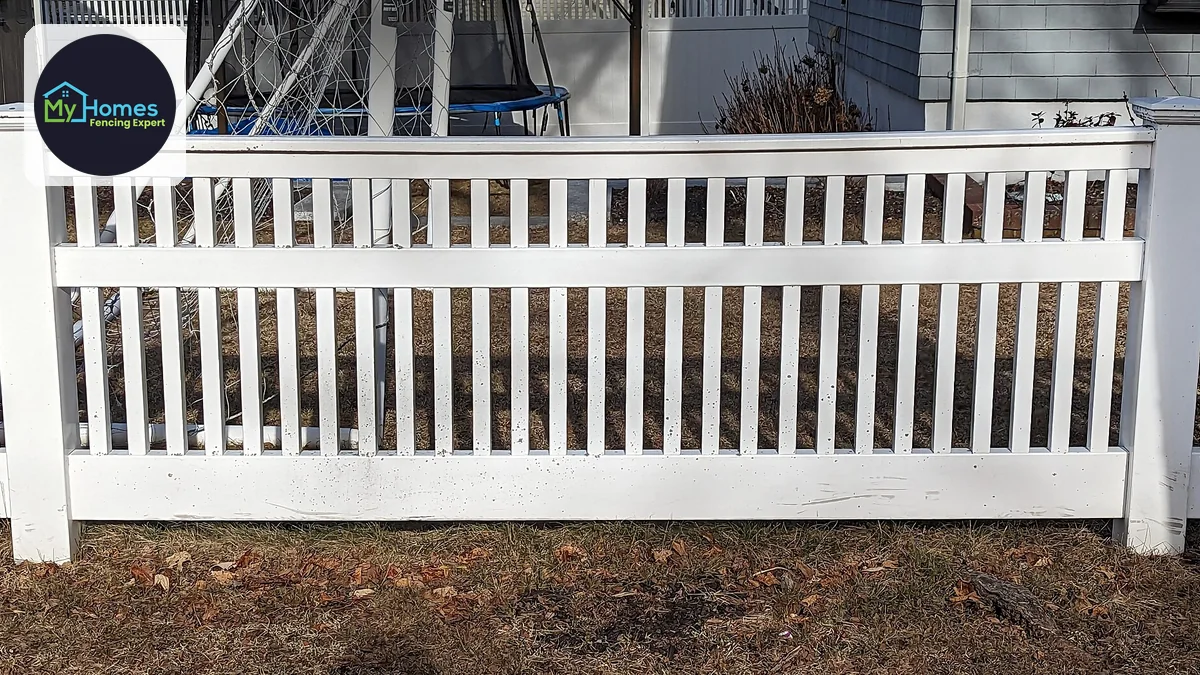
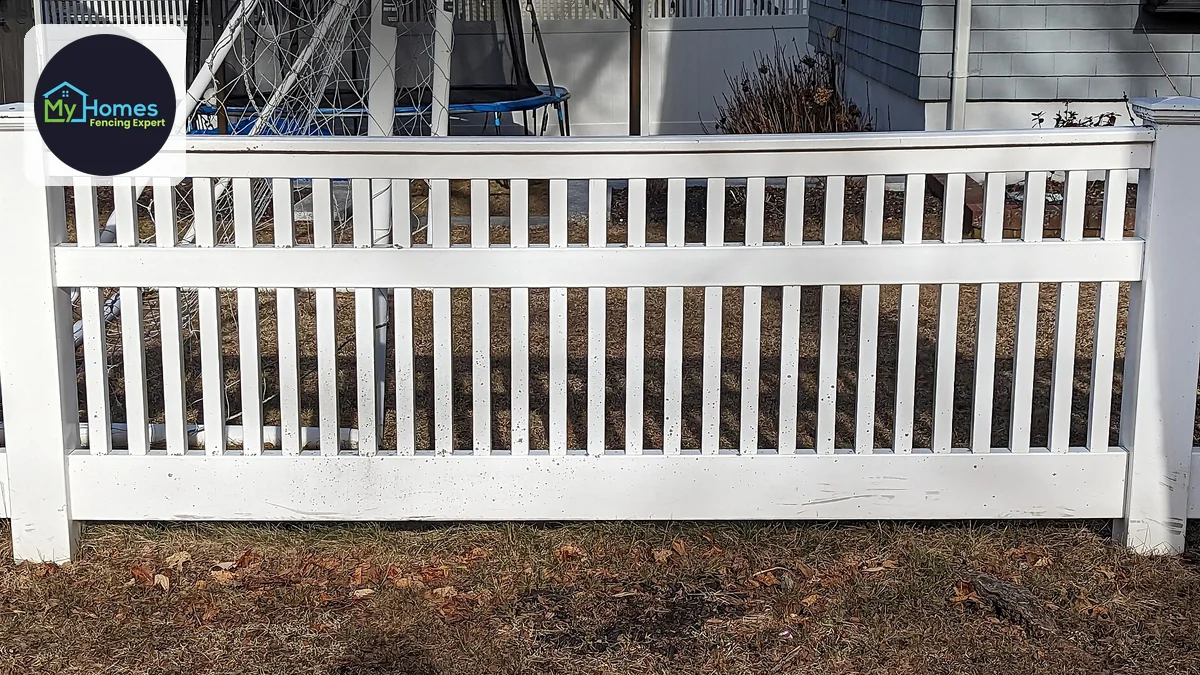
PVC owns the traditional register: picket fences that stay gleaming, smooth full-privacy panels, lattice tops — in whites, creams and soft greys. On a villa frontage or cottage garden it looks permanently fresh-painted.
Aluminium owns the modern register: horizontal and vertical slats, louvre screens, pool fencing, fine vertical bars — in blacks, charcoals, bronzes and the woodgrain-look finishes. On contemporary builds it reads as architecture.
Pick the register first. Homes that suit one rarely suit the other, which makes many PVC-versus-aluminium decisions pleasantly short.
Toughness: Cracks vs Dents
Impact is where the materials part ways physically. PVC is rigid and can crack under a sharp knock — a mower stone, a reversing trailer — especially in cold weather; damaged components are replaced rather than repaired.
Aluminium dents and scratches rather than cracking, and powder-coat scratches are cosmetic on a metal that doesn't rust. Individual slats or panels swap out when damage offends the eye.
Households with driveway traffic, sports balls and boisterous dogs lean aluminium on toughness. Quiet frontages make the difference academic.
Sun, Salt and the Auckland Test
UV is PVC's examination: quality stabilised profiles hold colour and strength for decades, while bargain product chalks, yellows and goes brittle. The brand and specification question matters more for PVC than almost any material.
Salt is everyone's examination, and aluminium sits it best in the whole industry — the metal doesn't rust and coastal care is a hose. PVC also performs well by the sea; its hardware and fixings are the parts to specify in stainless.
Either material beats coated steel and maintenance-hungry timber on the coast. Between the two, aluminium takes the beachfront tiebreak.
Price, Privacy and the Value Question
For full-privacy fencing, PVC panels typically undercut aluminium slat at privacy spacing — solid PVC infill is economical, while privacy-spaced slats are material-hungry. For semi-open styles, aluminium has the field largely to itself.
Lifetime costs converge near zero maintenance for both, so the value question is mostly the purchase price for the style you want — our cost guides for each break the tiers down.
Gates deserve a note: both systems hang quality gates, with aluminium's lightness an advantage on wider and automated openings.
What's the Price Gap Over a Real Boundary?
As a guide including GST, a PVC fence is $220–$500 per linear metre and an aluminium fence is $250–$650. Across a 20m boundary, that budgets at about $4,400–$10,000 in PVC and $5,000–$13,000 in aluminium, for a standard height on a level, accessible site.
The ranges overlap because each one covers several styles. A low PVC picket and a full-privacy PVC panel sit at different ends of its range, and so do open aluminium bars and privacy-spaced slats at the ends of aluminium's. The useful comparison is your chosen style in each material, priced at the same height, so ask for that rather than comparing two headline figures.
Gates are the other line to watch. They're priced separately in both systems, and a wide or automated gate generally favours aluminium because it's lighter on the hinges and the motor. On a run with a driveway gate, that can close some of the price gap.
Which Is Better for Pools, Wind and Hot Sun?
Pools. Aluminium is the usual choice, because purpose-built pool panels come ready for the barrier rules: at least 1.2m high, gaps of no more than 100mm in council checklists based on the Building Code, and self-closing gates. Some PVC products are made for pools as well, but don't assume a picket or lattice style qualifies. Ask for evidence that the specific product is suitable.
Wind. A solid PVC privacy panel takes the full force of a gust, while spaced aluminium slats let some of it through. Neither should be a problem if the posts and footings are designed for the site, but on an exposed ridge or a coastal section, a semi-open design puts less load on the structure. Our windy-sites guide goes through the options.
Sun. PVC expands and contracts more with temperature, so a good system lets its rails float within the posts. Long solid panels on a hot, north-facing boundary show this movement most. Aluminium barely reacts, although dark powder coat can get hot to the touch in full sun. In either case, choose a quality product and follow the system's installation instructions.
Settling It for Your Boundary
Traditional home, white picket or clean privacy panel, friendly budget: PVC. Contemporary home, slat or screen look, coastal address or rough-and-tumble household: aluminium. The rare genuine tie goes to whichever sample looks right held against your house.
My Homes Fencing Expert installs both across Auckland and will quote your line in each, with samples to hold and the specification questions answered plainly.
Call 022 315 8987 or book a free, no-obligation quote online — this is the rare fencing decision with no wrong answer, only a better fit.
Frequently Asked Questions
Both serve for decades in quality form. They differ in failure style: PVC can crack under sharp impact and bargain profiles age badly in UV; aluminium dents rather than cracks and is the industry's best coastal performer.
For full privacy, PVC panels usually cost less than privacy-spaced aluminium slat; for semi-open modern styles, aluminium is often the only contender. Maintenance costs are near zero for both, so purchase price for your style decides value.
Both handle salt air far better than steel or timber, and aluminium takes the tiebreak — the metal can't rust and care is a wash-down. Specify stainless hardware and fixings whichever you choose.
Quality UV-stabilised profiles don't — they're engineered for decades of exposure. Cheap unstabilised product can chalk, yellow and turn brittle, which is why the brand and specification question matters more for PVC than for most materials.
Yes — woodgrain-effect powder-coat finishes give slat fencing a timber look with aluminium's zero-maintenance behaviour. They cost more than standard colours and look best viewed in person before committing.
As a guide including GST, PVC is $220–$500 per linear metre and aluminium is $250–$650. The ranges overlap because each covers several styles, so compare your chosen style in each material at the same height.
Only if the specific product is designed for pool barrier use. The barrier must meet the height, gap and gate rules, and not every PVC style does. Aluminium pool panels are the more common choice. Check current guidance and get evidence for the product.
Official Sources
General information, not legal advice. Rules vary by property and zone, so check your address with Auckland Council before you build.
Ready to start your fencing project?
Get a free, no-obligation quote anywhere in Auckland.
Get a Free QuoteRelated fencing services